Merge County
- 4.6
- Rating
- 5.00M
- Installs
- Free
- Price

 Analysis by App-foxy
I spent my first sessions with Merge County expecting a familiar match-and-combine puzzle, but its appeal comes from giving those small combinations a visible purpose. Instead of treating every move as an isolated score, the game turns merged materials and objects into support for a growing town. That extra layer makes the early minutes feel more meaningful, especially when I only have a short break and want a puzzle that gives me a clear next step.
This is a free puzzle game from Microfun Limited, available for Everyone and listed for devices running Android 6.0 or later. It has built a sizeable audience, with an average rating of 4.6 from around 122 thousand ratings and more than 5 million installs. Those figures do not automatically make it a good fit for everyone, but they do match my impression that the game is easy to understand and immediately approachable.
Why the first week feels so satisfying
The opening appeal is the simple rhythm: collect or receive useful items, combine matching pieces, create something more valuable, and use the result to help the town progress. I never needed a long tutorial to understand the basic idea. The board communicates its logic visually, so the important question quickly becomes “what should I merge next?” rather than “how do I play?”
You May Also Like

 Blood Strike: 2.5 Anniversary
Blood Strike’s Loadouts Turn Every Drop Into a Tactical Gamble
A close look at Blood Strike’s custom loadouts: how fast access to signature weapons reshapes its battle royale rhythm, rewards preparation, and narrows the gap between fights.

 Pandora - Music & Podcasts
Pandora’s Music Is Easy to Start, but Harder to Recover
Pandora’s strength is its low-effort path from a seed to a station. Its weak spot is how much confidence it asks you to place in connection, setup, and quiet recovery.

 8 Ball Pool
 Is Built on Rivalries, Rematches, and Routine
A close look at the rivalries, rematches, shared routines, and unanswered safety questions that turn a quick pool match into a persistent mobile community.

 Samsung Music
’s Quiet Strength Is Playing What You Already Own
Its reach comes less from spectacle than from dependable access to a personal library. That simplicity is both the app’s strongest retention engine and its ceiling.

 AccuWeather: Weather Radar
AccuWeather Review: A Quick, Clear Forecast for Everyday Decisions
For everyday plans, the best forecast is the one you can understand quickly. AccuWeather makes rain timing, radar, and local conditions easy to act on, with a few trade-offs.

 Hill Climb Racing
Why Hill Climb Racing Still Turns Crashes Into One More Run
A tiny car, a bumpy hill and one more upgrade: Hill Climb Racing keeps resurfacing because its simple chaos makes every near-miss feel personal.
More From Our News Desk
View All News


That clarity matters on a phone. Many puzzle games make their first few minutes exciting through complicated rules, but Merge County does the opposite. It gives me a small set of understandable actions and lets the sense of progress come from arranging the board intelligently. The town provides a reason to care about those actions, while the merging itself remains the main source of moment-to-moment satisfaction.
During a typical first-week session, I might open the game while waiting for a kettle to boil or during a short commute. I can make a few combinations, check what the town needs, and stop without feeling that I have abandoned a long strategy. That makes it more flexible than a puzzle that demands a full uninterrupted round.
The most useful early habit is resisting the urge to merge everything immediately. A crowded board can look untidy, but some lower-level pieces may be more useful as ingredients for several possible chains. I found it better to pause, identify the current town objective, and then decide which materials should be combined. This small change turns random tapping into planning and reduces the feeling that I am constantly undoing my own work.
The game also benefits from a gentle sense of discovery. Combining familiar materials into a more advanced item is satisfying even when the individual move is simple. I enjoy that the board gradually becomes a record of decisions: some spaces contain active projects, some hold pieces waiting for a partner, and others are reserved for items I do not want to consume yet.
The board is more strategic than it first appears
The main challenge is not learning the merge gesture. It is managing limited attention and space. When several item lines are developing at once, I have to choose between finishing a useful chain now or preserving pieces that may become valuable later. That trade-off gives the game more depth than a basic “combine three identical objects” loop.
My practical advice is to keep a small reserve of common materials instead of converting every available piece into the highest level possible. A high-level item can feel like progress, but it may not help if the next town task requires several modest components. I also try to leave open spaces near the areas where new pieces tend to appear, because filling the board too quickly makes otherwise simple tasks awkward.
This is one of the game’s less obvious strengths: organization becomes part of the puzzle. I do not need a perfect layout, but separating unfinished chains from completed materials makes later decisions much easier. Players who enjoy sorting, prioritizing, and gradually cleaning up a board will probably get more from it than players who want a completely spontaneous puzzle.
The town layer gives those choices emotional context without turning the game into a traditional city-building simulation. I am not managing every civic system or designing a detailed metropolis. Instead, the town acts as a visible destination for the resources I create. That keeps the focus on merging while making each round feel less disposable than a score-based puzzle.
What makes it work for everyday play
Merge County fits naturally into short sessions because its central action is easy to resume. If I put the phone down after completing one small chain, I can return later and immediately see what remains on the board. This is useful for people who prefer a game that can be checked several times throughout the day rather than played in one long sitting.
It is also suitable for players who like light progression but do not want a demanding competitive environment. The town gives me a reason to continue, yet the experience feels more personal than confrontational. Someone looking for a calm puzzle with a sense of accumulation may find it more comfortable than a game built around leaderboards, timed matches, or constant pressure from other players.
On the other hand, the same gentleness can feel limited if you need intense variety. The core action remains merging materials and items. If you lose interest once you understand a game’s main loop, the town theme may not be enough to keep you engaged for long. I would recommend trying it for the puzzle itself, not assuming that the surrounding town will transform it into a much broader strategy game.
Can it earn a place after the novelty fades?
I find its staying power depends less on chasing rapid town progress and more on whether I enjoy returning to a board with unfinished choices. Treating each visit as a chance to make one useful merge or leave the pieces better organized keeps the routine satisfying without turning it into a chore. That makes the next question less about novelty and more about whether this kind of gentle, ongoing upkeep suits my everyday play.
Month-to-month value depends on your routine
After the first burst of discovery, the question changes from “is this enjoyable?” to “do I still have a reason to open it?” For me, the answer depends on whether I treat it as a small daily pastime rather than a game that must provide a major new experience every time. The satisfaction comes from continuing a chain, improving the board’s organization, and helping the town move forward in manageable steps.
That recurring value is strongest for players who enjoy visible accumulation. I like seeing a messy collection of basic items gradually become a more purposeful set of resources. The game rewards patience more than quick reflexes, so it can remain pleasant when I want something low-pressure. It is a good companion to routine moments such as a lunch break, a quiet evening, or a few minutes before bed.
Its longer-term appeal is weaker for anyone who needs a constantly changing challenge. Repetition is built into the design. Even when the immediate objective changes, I am still collecting, arranging, and merging. The town gives the activity direction, but it does not remove the underlying repetition. That is not a flaw for fans of merge puzzles; it is the central trade-off of the genre.
I also think the game works best when I set my own stopping point. Trying to force a large amount of progress in one sitting can make the board feel like a chore. A better routine is to complete a few sensible combinations, leave the board in an organized state, and return when I actually want a quiet puzzle. This approach preserves the relaxing quality and prevents the progression system from taking over my free time.
The maintenance burden is mostly mental, not technical
The recurring work in Merge County is board maintenance. I have to decide which pieces deserve space, which chains should be advanced, and which items are safe to combine. None of this is difficult, but it does ask for more attention than a puzzle where every move disappears immediately after scoring.
There is a useful distinction between productive organization and needless perfectionism. I do not need to arrange every item in a flawless pattern. I only need enough order to recognize unfinished chains and avoid accidental waste. Spending too much time rearranging can become its own form of friction, especially when the reward is no better than simply making the next sensible merge.
For a smoother routine, I suggest using three mental groups: pieces that can be merged now, pieces being saved for a specific need, and pieces that are temporary clutter. This simple classification helps me make decisions quickly. It also prevents the common mistake of consuming a useful component just because a matching pair happens to be visible.
The game is free to download, but optional in-app purchases range from $0.99 to $99.99 per item. That matters when judging long-term comfort. I can enjoy the basic loop without paying, but players who dislike seeing purchase options in a progression-focused game may find the commercial layer distracting. My advice is to decide in advance whether you are treating the game as a free short-session pastime or as a hobby worth spending on. Mixing those expectations can make the experience feel more frustrating than it needs to be.
There is also a practical maintenance question: does the game remain pleasant when I am not actively progressing quickly? For me, it does when I accept that some sessions are about tidying the board or preparing future merges rather than completing a major town improvement. If every visit must produce a dramatic result, the slower rhythm may become disappointing.
Where fatigue begins
The first source of fatigue is repetition. Combining similar materials is satisfying in small doses, but the same loop can lose its freshness when played too intensively. I would not choose this as my only mobile game if I wanted constant mechanical change. It works better alongside other games with different pacing and demands.
The second source is decision clutter. As more pieces accumulate, the board can require more planning than the simple presentation initially suggests. That is enjoyable when I am in the mood to think, but it can be irritating when I only wanted a quick distraction. A short session can unexpectedly become an exercise in deciding what not to merge.
The third is the tension between progress and patience. The game encourages me to keep working toward town improvements, but the most efficient choice is not always the most immediately rewarding one. Saving materials can feel slow, particularly when a visible combination is available. Players who prefer constant completion may find this restraint less satisfying than players who enjoy delayed payoff.
There is also a risk of confusing activity with progress. Rearranging pieces, making low-value combinations, and clearing space can feel busy without advancing the town meaningfully. I get better results when I check the current goal before touching the board. If a move does not support that goal or improve the board’s future flexibility, I usually leave it alone.
Who should choose it, and who should skip it?
I would recommend Merge County to someone who likes gentle puzzle progression, visual organization, and short sessions that can be resumed easily. It is especially appealing if you enjoy watching a collection develop over time and prefer planning to reflexes. The Everyone rating also makes it an approachable choice for a broad audience, although the purchase options are worth keeping in mind for shared devices or younger players.
I would be more cautious recommending it to someone who wants a pure puzzle with no progression layer. In that case, a traditional match game may provide faster rounds and less board management. I would also point players toward a different option if they want deep city planning, because the town here supports the merge loop rather than replacing it with detailed construction strategy.
Likewise, players who dislike waiting, repeated resource chains, or optional spending prompts may not enjoy keeping it installed. The game asks for patience, and its best moments come from gradual improvement rather than dramatic surprises. That is a clear identity, but it is not universal.
My long-term verdict
My experience with Merge County is that it earns lasting space when I use it as a calm, structured habit rather than expecting it to provide endless novelty. The first week is easy to enjoy because the rules are clear and the town gives every merge a purpose. Over time, the deciding factor is whether I like maintaining a board, saving materials, and making progress in small portions.
The current release is version 5.2.0, and the game remains free to start. Those details make it easy to try without a large commitment, but the real commitment is attention: the more organized I am, the more satisfying the experience becomes. I would not call it a game I need to play every day, yet it is one I can return to comfortably when I want a low-pressure puzzle with a visible sense of growth.
My strongest recommendation is to play deliberately. Keep useful reserves, protect open board space, and check the town’s immediate needs before merging attractive pairs. Those habits reduce the main frustrations and make the slower progression feel intentional. If you enjoy that kind of planning, the game has enough recurring value to stay installed. If you need constant surprise or a more substantial strategy system, the novelty is likely to fade before the town feels worth maintaining.
In the end, this is a focused merge puzzle with a supportive town framework, not an all-purpose mobile pastime. I appreciate that clarity. It knows what it wants me to do, gives that action a visual reason, and fits neatly into spare moments. For the right player, the lasting appeal comes from small decisions that gradually make the whole board—and the town around it—feel more manageable.
FAQs for Merge County
01What is Merge County?
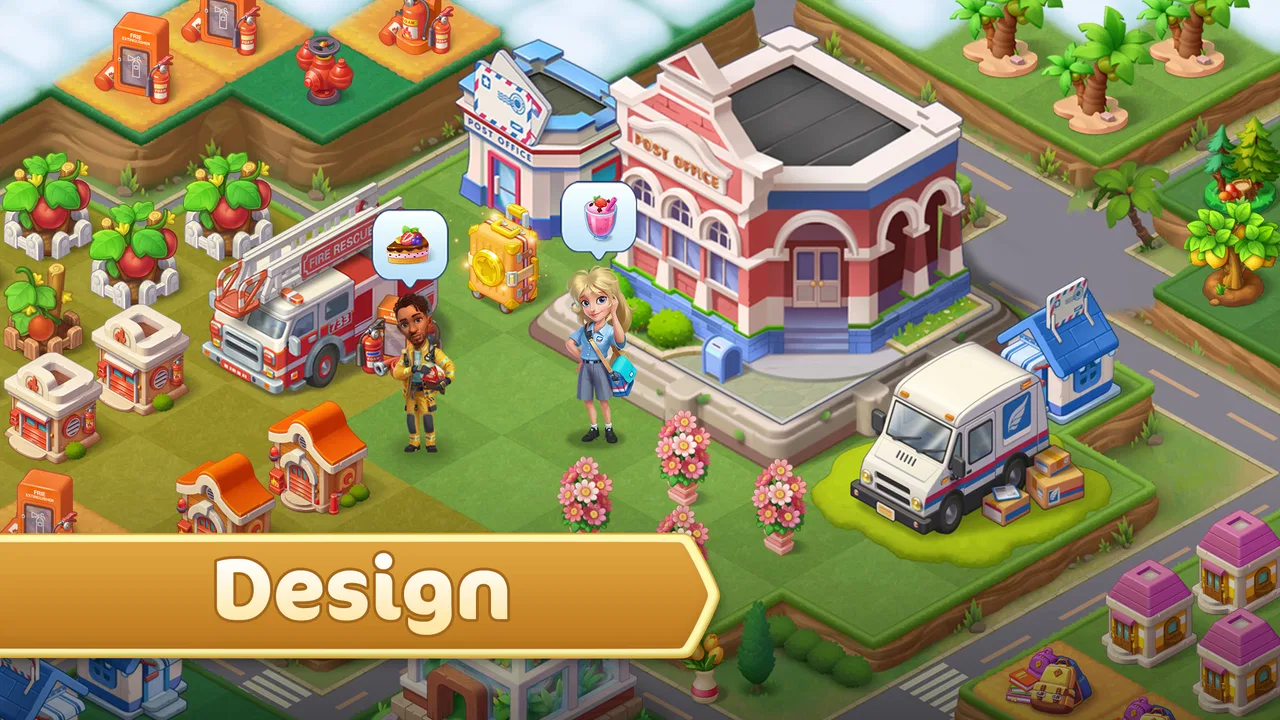
Merge County is a casual puzzle and town-building game in which you combine matching items to create more advanced objects. As you progress, you help develop a small community, complete tasks, unlock new areas, and follow the story of its residents. The game combines relaxing merge mechanics with light management and renovation-style progression, making it suitable for players who prefer short, easy-to-understand gameplay sessions.
02How do you play Merge County?
The main gameplay is based on merging three or more identical items. Combining objects produces upgraded resources, which can then be used to complete orders, repair buildings, improve locations, and advance through the town. The board can become crowded, so planning your merges is important. Completing missions and events usually provides additional rewards, while new areas introduce more objects and objectives to manage.
03Is Merge County free to download and play?
Merge County is generally available as a free-to-download game, but it may include optional in-app purchases. Players can usually progress without paying, although energy limits, waiting periods, and limited resources can slow advancement. Purchases may provide extra energy, coins, boosters, or special bundles. Before downloading, parents and users should review the device’s purchase settings, especially if the game will be played by children.
04Does Merge County require an internet connection?
An internet connection may be needed for some features of Merge County, including advertisements, cloud-related functions, limited-time events, updates, and purchases. Basic parts of the game may work temporarily offline, but availability can depend on the version installed and the device being used. For the most reliable experience, it is recommended to play while connected to a stable Wi-Fi or mobile data network.
05Is Merge County suitable for children and casual players?
Merge County is designed to be approachable, with simple controls, colorful visuals, and objectives that are introduced gradually. It can be a good choice for casual players and families, although the presence of advertisements, optional purchases, and time-based energy systems should be considered. Younger players may need supervision to prevent accidental purchases. The game is best suited to users who enjoy relaxed puzzle progression rather than fast or competitive action.
Pros
- Relaxing merge gameplay that is easy to learn and play in short sessions.
- Town-building progression gives each merge action a clear purpose.
- Colorful visuals and charming characters make the game appealing.
- Regular tasks and events provide extra objectives beyond the main map.
- Playable on mobile devices with simple controls and readable menus.
Cons
- Energy limits can interrupt progress and encourage waiting or purchases.
- Higher-level items may require many repeated merges to complete.
- Some upgrades and rewards take a long time without spending currency.
- The gameplay can feel repetitive after extended play sessions.
- Ads and in-app purchases may be prominent for free players.

Merge County
Gallery